 Loopy Panda
How to Single Crochet
To single crochet (sc), insert the hook into the next stitch, yarn over, and pull up a loop, so you have 2 loops on the hook. Yarn over again and pull through both loops. That is one single crochet. It is the shortest basic stitch after the slip stitch and the main stitch of amigurumi. In UK terms it is called double crochet (dc).
What you need
- Medium (worsted) yarn in a light colour
- Crochet hook in the size on the yarn label, usually 5.0 mm (H-8) for worsted
- Stitch marker
Step by step
- Make a foundation chainChain the number the pattern gives. To practise, chain 11.
- Insert the hookInsert the hook into the 2nd chain from the hook. On later rows, insert it under both top loops of the next stitch.
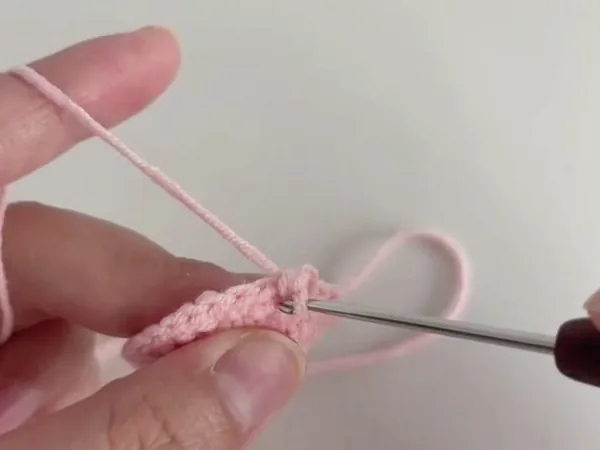
- Yarn over and pull up a loopYarn over and pull the yarn back through the stitch. You now have 2 loops on the hook.
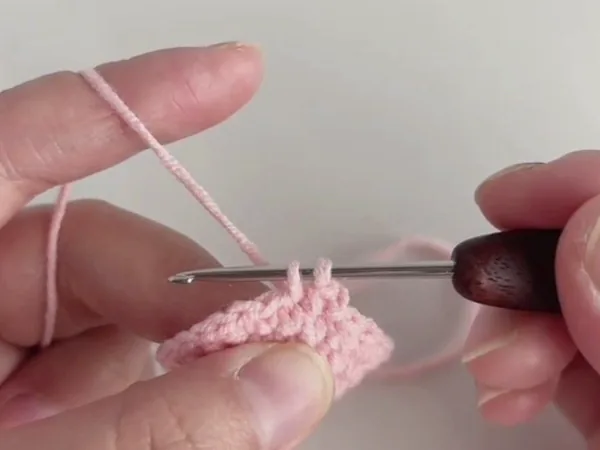
- Yarn over and pull through 2Yarn over again and pull through both loops on the hook. One loop remains. That is one single crochet.
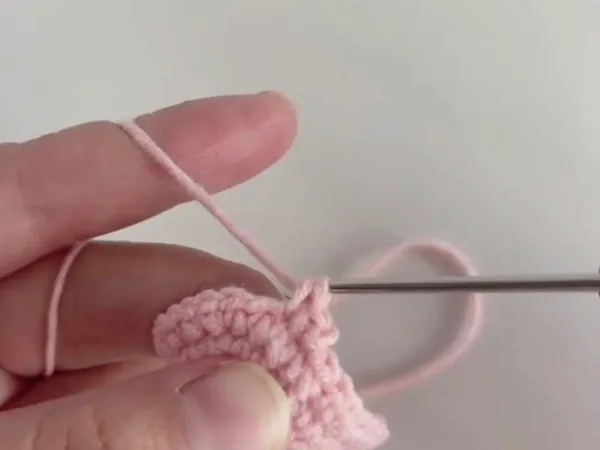
- Work across the rowWork 1 single crochet in each chain to the end. If you chained 11, you have 10 stitches.
- Turn and start the next rowChain 1 and turn the work. The chain 1 does not count as a stitch. Work 1 single crochet in the first stitch and in each stitch across, 10 in total.
- Count your stitchesCount the stitches at the end of every row. Losing or gaining stitches at the edges is the most common beginner problem.
How single crochet appears in patterns
| Pattern style | What you will see | Meaning |
|---|---|---|
| US written | sc in each st around (24) | 1 single crochet in every stitch, 24 stitches |
| UK written | dc in each st around (24) | Same stitch; UK dc = US sc |
| Chinese written | 24X or 不加不减 | 短针; X = one single crochet |
| Chart | An X or a + | See the single crochet symbol |
If a pattern for amigurumi uses “dc” for almost every stitch, it is almost certainly written in UK terms. See US vs UK crochet terms.
Single crochet in the round (amigurumi)
Amigurumi is worked in rounds, not rows. You start with a magic ring of 6 single crochet and keep going around without turning. When a pattern says sc in each st around (24), work 1 single crochet into each of the 24 stitches of the last round.
Most amigurumi patterns work in a continuous spiral: you do not join with a slip stitch or chain at the end of a round, you simply work the first stitch of the next round. Put a stitch marker in the first stitch of each round and move it up every time, or you will lose count. Joined rounds (slip stitch into the first stitch, chain 1) are used when stripes must line up, but they leave a visible seam.
If your spiral pieces twist to one side, that is normal for single crochet in the round. See why amigurumi leans.
Common mistakes
- Missing the last stitch of a row. The last stitch is small and easy to skip. Put a stitch marker in the first stitch of each row so you can find it on the way back.
- Working into the turning chain. The chain 1 is not a stitch. Start the row in the first real stitch.
- Going under one loop only. Unless the pattern says BLO or FLO, go under both top loops (the V).
- Tension too loose for amigurumi. Stuffing shows through gaps. Use a hook one or two sizes smaller than the yarn label suggests.
If your single crochet looks wrong
- The piece gets wider or narrower. Stitches are being added or skipped at the row ends. Count every row and see why crochet gets wider.
- The edges slant or wave. The first and last stitch are worked differently from the rest. Work the first stitch right next to the turning chain and do not skip the last, smaller stitch.
- Holes between stitches. The tension is too loose for the hook. Go down a hook size, or see gaps in amigurumi.
- Hard to get the hook in. You are pulling the loop on the hook too tight. Keep the working loop on the wide part of the hook, not the throat. See tension too tight or loose.
- The fabric curls. The foundation chain is tighter than the rows. Chain with a hook one size larger. See why crochet curls.
- Ridges across the fabric. You are going under one loop only. That is back loop only crochet, which patterns ask for on purpose; for plain single crochet go under both loops.
How to single crochet 3 together (sc3tog)
A sc3tog turns 3 stitches into 1. Insert the hook into the next stitch and pull up a loop (2 loops on the hook), do the same in the following stitch (3 loops) and in the one after (4 loops), then yarn over and pull through all 4. For 2 stitches into 1, see sc2tog and other decreases; for amigurumi the invisible decrease is neater.
Left-handed single crochet
Left-handers hold the hook in the left hand and the yarn in the right, and work from left to right along the row. The steps are exactly the same, only mirrored. The video below is the demonstration above flipped left to right, so you can copy it hand for hand.
Variation: yarn under single crochet
Some amigurumi makers pull up the first loop with a yarn under (hook goes over the yarn, catching it from the front) instead of a yarn over. The stitches look like small x shapes instead of Vs, and the fabric is slightly tighter and shorter. Patterns rarely require it. Whichever you choose, use it for the whole piece so the stitches match.
Single Crochet Symbol
Single crochet (sc) is drawn as an X in Japanese and Chinese charts and as a + in many Western charts. It is the main stitch of amigurumi. The Chinese name is 短针, and Chinese written patterns use the letter “X”, so “6X” means 6 single crochet.
| US name and abbreviation | Single Crochet (sc) |
|---|---|
| UK name and abbreviation | Double crochet (dc) |
| Chinese name | 短针 (X针) |
| Chinese written shorthand | X |
| Japanese name | 細編み(こまあみ) |
X or +?
Both symbols mean the same stitch. Japanese and Chinese charts use X; the Craft Yarn Council standard used in many US patterns uses +. Check the chart key if you are unsure.
US vs UK warning
UK patterns call this stitch double crochet (dc). If a UK amigurumi pattern says “dc”, it means the US single crochet. See US vs UK crochet terms.
What does “6X” mean in a Chinese pattern?
6 single crochet. In a magic ring round, “环起6X” means make 6 single crochet into a magic ring.
Is single crochet the same as UK double crochet?
Yes. US single crochet (sc) = UK double crochet (dc).
Chart symbols on this page
Frequently asked questions
What does sc mean in crochet?
sc means single crochet in US patterns: insert the hook, pull up a loop, then pull through both loops. In UK patterns the same stitch is written dc (double crochet), and in charts it is an X or a +.
Is single crochet the same as UK double crochet?
Yes. US single crochet (sc) is called double crochet (dc) in UK patterns. It is the same stitch.
What does X mean in a Chinese crochet pattern?
X is 短针, the single crochet. 6X means 6 single crochet, and 环起6X means 6 single crochet in a magic ring.
Does the chain 1 at the start of a row count as a stitch?
In single crochet it usually does not. Work the first single crochet into the first stitch, right next to the turning chain.
Why is my single crochet piece getting wider or narrower?
You are adding or skipping stitches at the ends of rows. Count every row and mark the first and last stitch.
What hook size should I use for single crochet amigurumi?
Usually one or two sizes smaller than the yarn label suggests, so the fabric is dense and stuffing does not show. Your pattern will name the hook it was designed with.
How tall is a single crochet?
About as tall as one chain, which is why a row of single crochet starts with a turning chain of 1. A half double crochet is about 2 chains tall and a double crochet about 3.
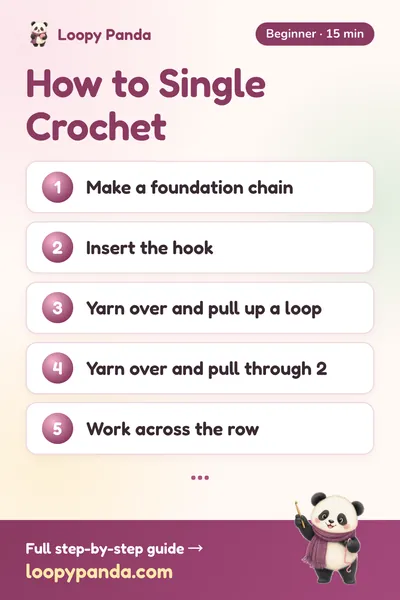
Save it for later
Pin this guide to your Pinterest board so it's there when you pick up your hook.
Save to Pinterest
Tell me when new free patterns are out
We'll send you a short email when a new free pattern or tutorial goes up. No spam.
Thank you! You're on the list. We'll email you when a new free pattern is out.
Please enter a valid email address.
Please tick the box to agree to receive our emails.
Too many tries. Please wait a few minutes and try again.
Something went wrong. Please try again later.
New short videos every week, too, on YouTube