 Loopy Panda
Best Yarn for Amigurumi
For most amigurumi, the best yarn is a smooth cotton, cotton blend or acrylic in DK or worsted weight. These show each stitch clearly and hold their shape when stuffed. Cotton gives the crispest stitches, acrylic is soft and cheap, and plush or chenille makes very soft toys but is harder to work. Use a hook smaller than the label suggests.
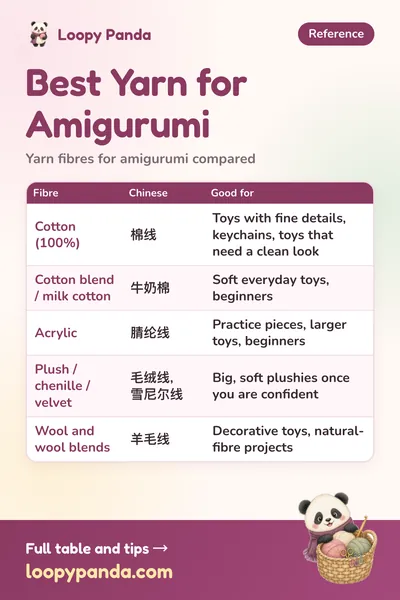
Yarn fibres for amigurumi compared
| Fibre | Chinese | Pros | Cons | Good for |
|---|---|---|---|---|
| Cotton (100%) | 棉线 | Crisp, clear stitches; little fuzz; firm fabric that holds shape; washable | Very little stretch, so tight stitches are hard on the hands; can split; can feel stiff | Toys with fine details, keychains, toys that need a clean look |
| Cotton blend / milk cotton | 牛奶棉 | Softer and a little stretchier than pure cotton; easy to work; common in Chinese patterns | Fibre mix varies by maker, so check the label; some pill or split | Soft everyday toys, beginners |
| Acrylic | 腈纶线 | Inexpensive; huge colour range; soft; some stretch; machine washable on gentle settings | Can pill and get fuzzy with handling; some split; fuzz blurs stitch definition | Practice pieces, larger toys, beginners |
| Plush / chenille / velvet | 毛绒线, 雪尼尔线 | Very soft, cuddly finish; hides small gaps; thick, so toys work up fast and large | Stitches are hard to see and count; hard to undo; chenille can form loose loops (“worming”); can shed | Big, soft plushies once you are confident |
| Wool and wool blends | 羊毛线 | Elastic, springs back, holds shape well; warm natural look | Can felt when washed unless labelled superwash; some people find it itchy or are sensitive to wool; fuzzy halo | Decorative toys, natural-fibre projects |
Whatever the fibre, beginners find it easiest to work with a smooth, tightly twisted yarn in a light colour. Dark colours, fuzzy yarns like mohair, and novelty yarns hide the stitches.
Which yarn weight to choose
Amigurumi can be made in any weight. The same pattern in thicker yarn simply makes a bigger toy, and the safety eyes may need to change size too.
| Weight | Common hook for amigurumi | Result |
|---|---|---|
| Fine / sport (2) | Around 2–3 mm | Small toys and details; slower and fiddlier |
| Light / DK (3) | About 2.5–3.5 mm | A popular size for small and medium toys |
| Medium / worsted (4) | About 3.5–4 mm | Easy to see and handle; good for beginners |
| Bulky and plush (5–6) | Varies a lot; follow the pattern | Large, soft toys that grow quickly |
These ranges are starting points, not rules. The goal is fabric tight enough that the stuffing does not show when stretched. If you see white stuffing between stitches, go down a hook size. If the hook will not go into the stitches, go up a size. For standard weights see the yarn weight chart, and for hook conversions the hook size chart.
How to choose a yarn for a specific pattern
- Match the weight and hook in mm that the pattern gives, not the yarn's name. Different makers use names like “milk cotton” for different fibre mixes.
- Compare the length per weight on the label (for example metres per 50 g). Two yarns with a similar number are usually a similar thickness.
- Crochet a small test circle of 4–5 rounds. Stretch it gently: if you can see through it, go down a hook size.
- Think about who the toy is for. For a baby or young child, choose a yarn that is easy to wash and does not shed, and embroider the eyes instead of using safety eyes.
Frequently asked questions
Is cotton or acrylic better for amigurumi?
Both work well. Cotton gives crisper stitches and a firm, clean look but has little stretch. Acrylic is softer, stretchier and cheaper but can get fuzzy with use. Choose cotton for detail and acrylic for softness and budget.
What is milk cotton yarn?
Milk cotton (牛奶棉) is a soft cotton-blend yarn popular for amigurumi, especially in Chinese and other Asian patterns. The fibre mix varies by maker, so read the label for the content and suggested hook size.
Is chenille or plush yarn good for beginners?
Not for a first project. The stitches are hidden by the pile, so it is hard to see where to insert the hook or to count. Learn on smooth yarn first.
What yarn weight is best for amigurumi?
DK (3) and worsted (4) are the most common. Worsted is easiest to see and handle for beginners; DK makes a slightly smaller, finer toy from the same pattern.
Can I use a different yarn from the pattern?
Yes, but the toy will change size if the thickness changes. Match the weight and hook size in mm, and check that the fabric is still tight enough to hide the stuffing.
Save it for later
Pin this guide to your Pinterest board so it's there when you pick up your hook.
Save to Pinterest
Tell me when new free patterns are out
We'll send you a short email when a new free pattern or tutorial goes up. No spam.
Thank you! You're on the list. We'll email you when a new free pattern is out.
Please enter a valid email address.
Please tick the box to agree to receive our emails.
Too many tries. Please wait a few minutes and try again.
Something went wrong. Please try again later.
New short videos every week, too, on YouTube