 Loopy Panda
Pip the Big-Eyed Mouse: Amigurumi Pattern
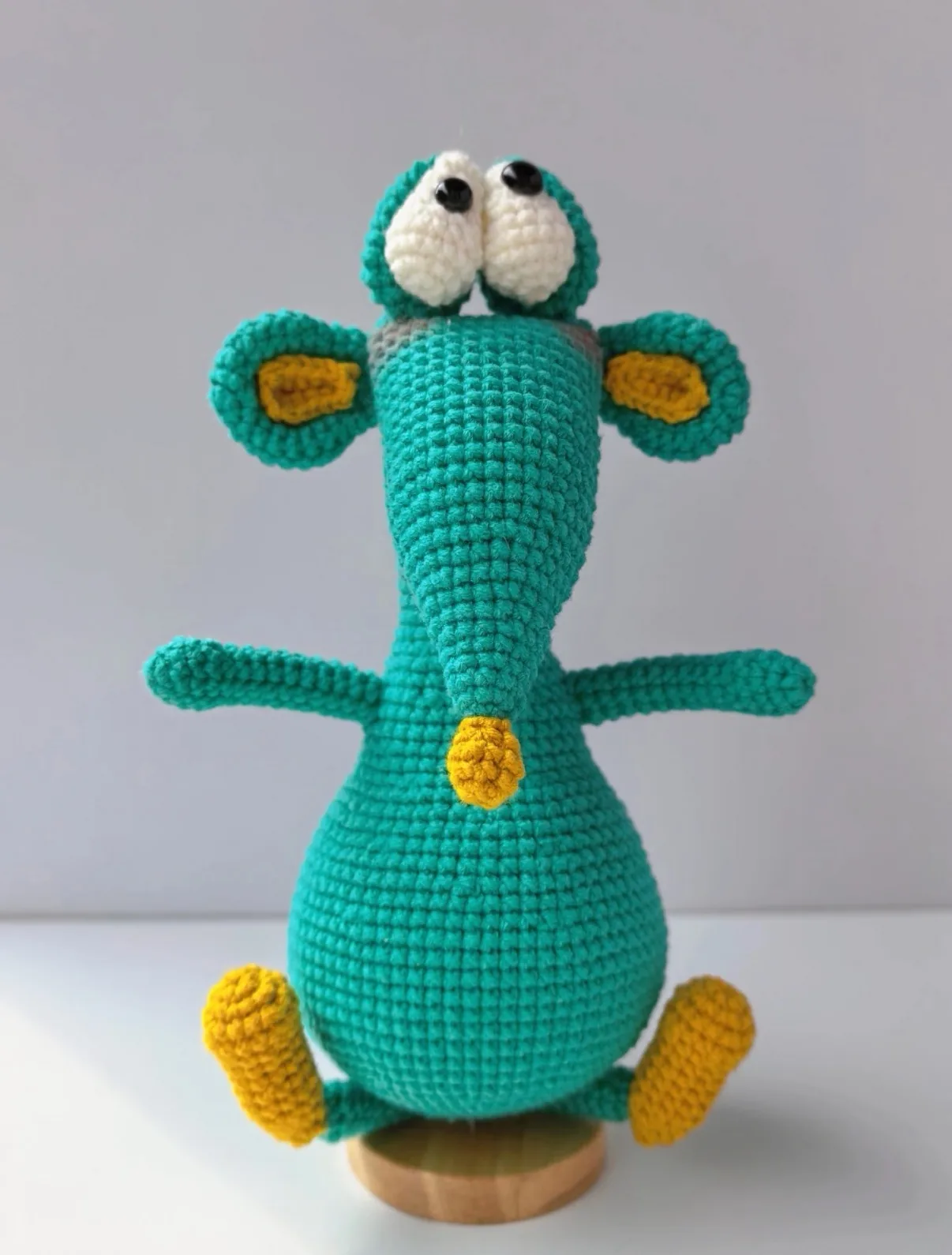
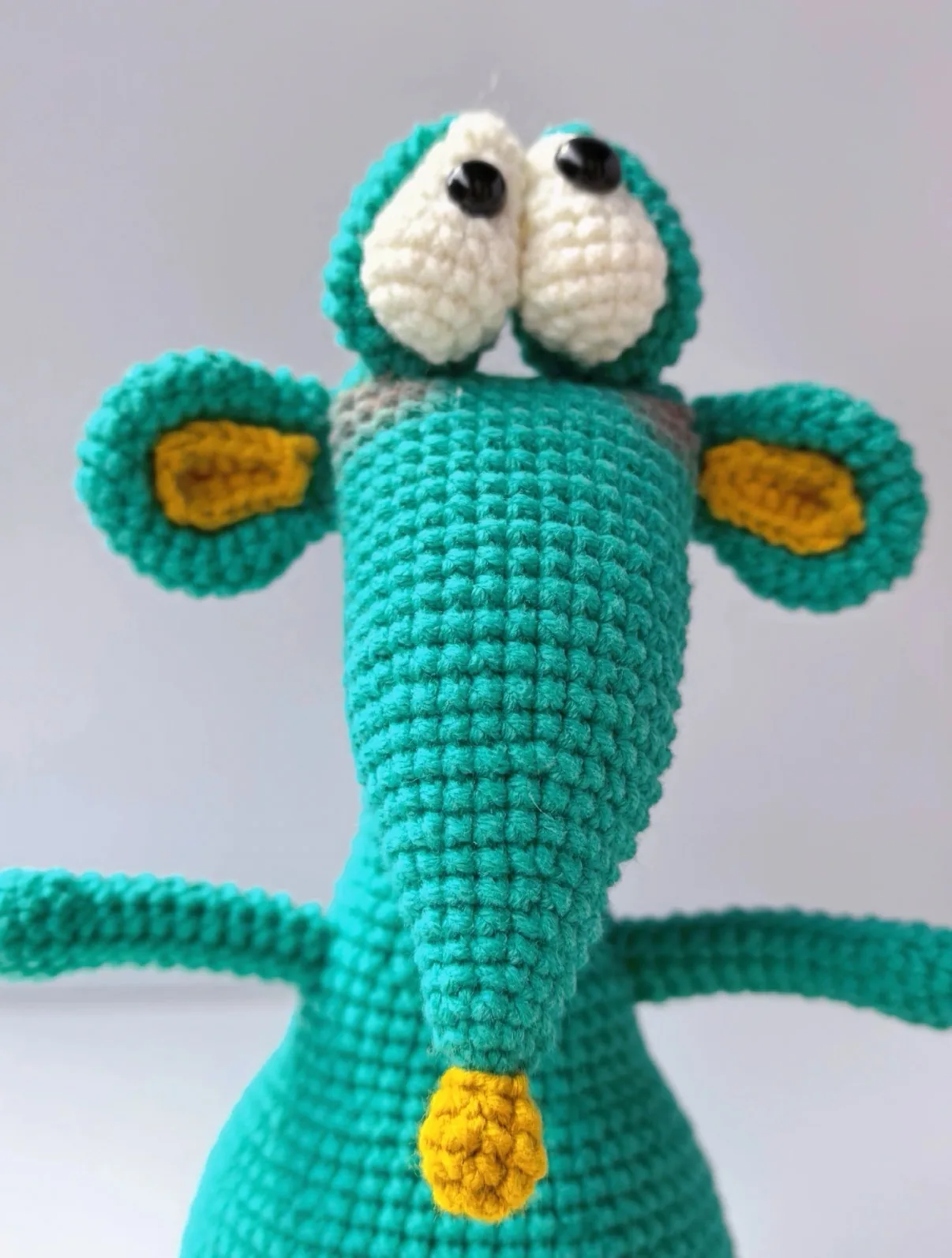
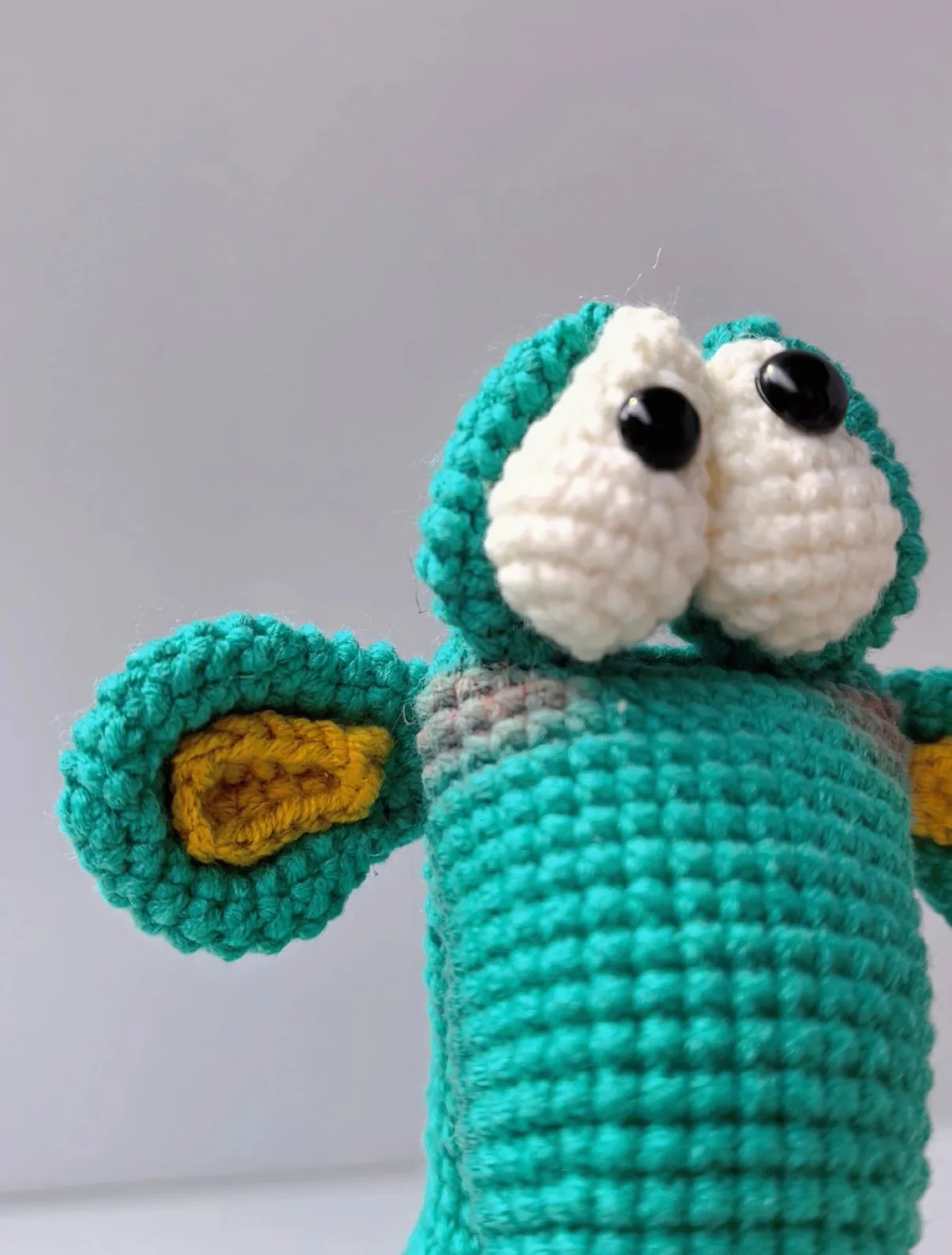
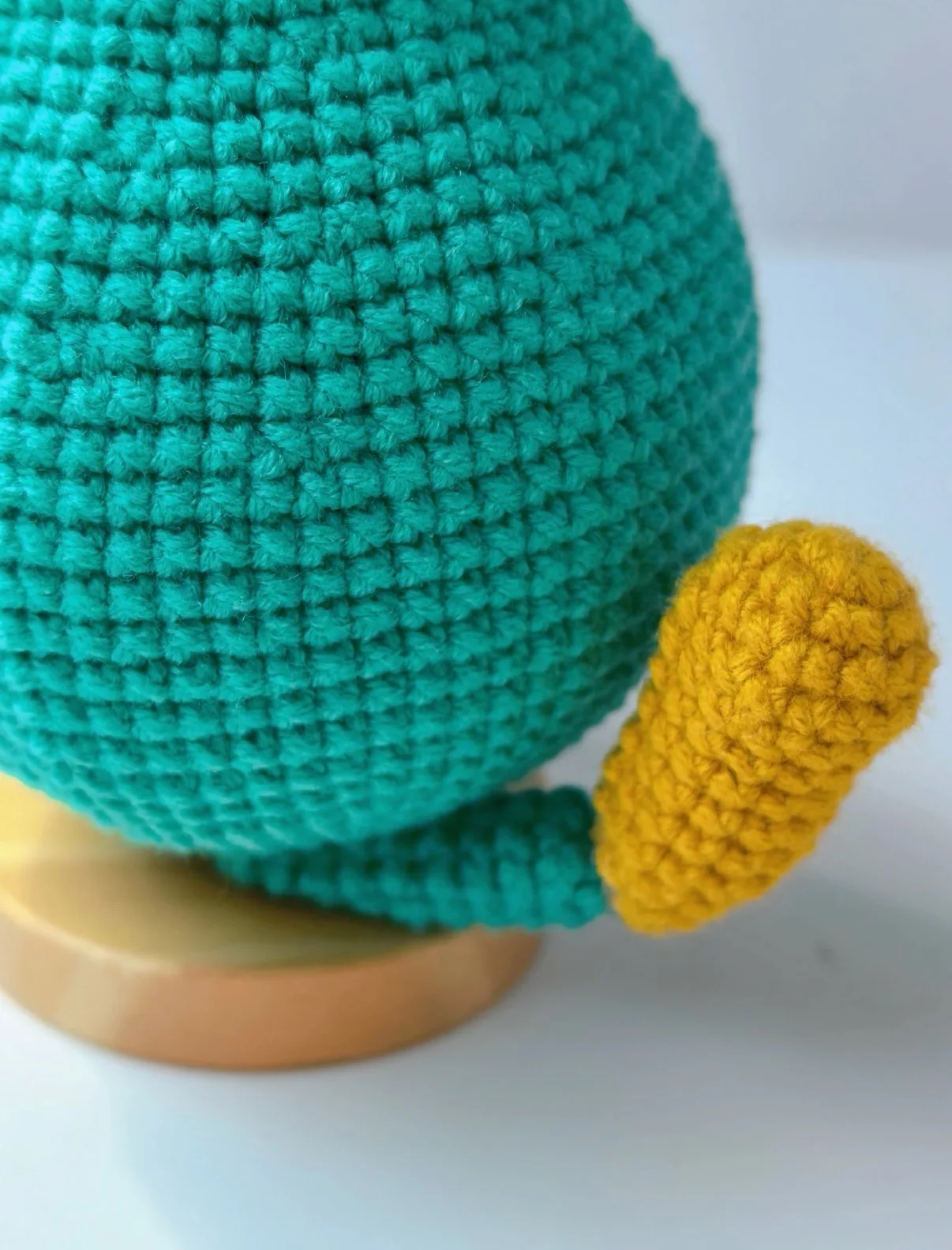
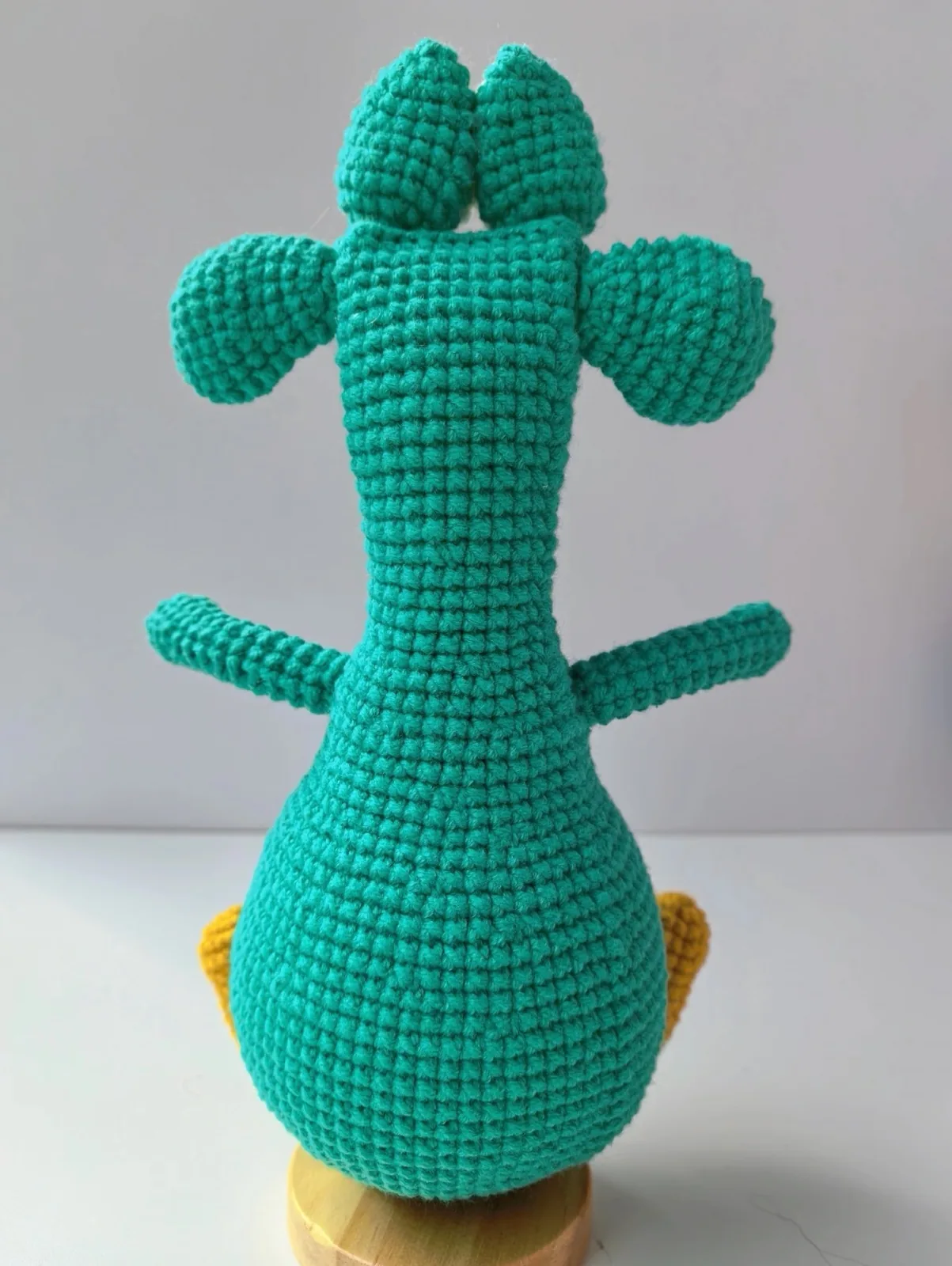
Pip is a tall, pear-shaped green mouse with a long snout, big white googly eyes under green eyelids, round ears with mustard inner ears, thin arms and legs and mustard feet, all worked in single crochet in the round. The head, body, eyeballs and nose are stuffed; the ears, eyelids, arms and feet are not.
Designed, crocheted and photographed by our maker. Every round's stitch count is checked.
What you need
- Yarn: 5-ply cotton (the maker's: Chinese 5-strand cotton yarn) in green (body, head, ears, eyelids, arms, legs, tail), mustard yellow (feet, nose, inner ears) and white (eyeballs)
- Crochet hook: 3.0 mm (the maker's size)
- A pair of small black safety eyes
- Fibre stuffing, a stitch marker and a tapestry needle
Abbreviations (US terms)
Worked in a continuous spiral: don't join the rounds; move a stitch marker up every round. Stuff each stuffed part when 2–3 rounds are left, then finish the last rounds.
| Abbreviation | Chinese pattern | Meaning |
|---|---|---|
| ch | CH | chain |
| sc | X | single crochet |
| hdc | T | half double crochet |
| dc | F | double crochet |
| inc | V | 2 sc in the same stitch |
| dec | A | 2 sc together (invisible decrease) |
| 3 sc in one st | W | 3 sc in the same stitch |
Body (green)
- Rnd 1: 6 sc in a magic ring (6)
- Rnd 2: inc in each st around (12)
- Rnd 3: (sc, inc) x6 (18)
- Rnd 4: (sc, inc, sc) x6 (24)
- Rnd 5: (sc 3, inc) x6 (30)
- Rnd 6: (sc 2, inc, sc 2) x6 (36)
- Rnd 7: (sc 5, inc) x6 (42)
- Rnd 8: (sc 3, inc, sc 3) x6 (48)
- Rnd 9: (sc 7, inc) x6 (54)
- Rnd 10: (sc 4, inc, sc 4) x6 (60)
- Rnd 11: (sc 9, inc) x6 (66)
- Rnd 12: (sc 5, inc, sc 5) x6 (72)
- Rnd 13–21: sc in each st around (72)
- Rnd 22: (sc 5, dec, sc 5) x6 (66)
- Rnd 23: sc in each st around (66)
- Rnd 24: (sc 9, dec) x6 (60)
- Rnd 25: sc in each st around (60)
- Rnd 26: (sc 4, dec, sc 4) x6 (54)
- Rnd 27: sc in each st around (54)
- Rnd 28: (sc 7, dec) x6 (48)
- Rnd 29: sc in each st around (48)
- Rnd 30: (sc 3, dec, sc 3) x6 (42)
- Rnd 31: sc in each st around (42)
- Rnd 32: (sc 5, dec) x6 (36)
- Rnd 33–34: sc in each st around (36)
- Rnd 35: (sc 2, dec, sc 2) x6 (30)
- Rnd 36–37: sc in each st around (30)
- Rnd 38: (sc 3, dec) x6 (24)
- Rnd 39–56: sc in each st around (24). Stuff the body as you go; leave the top open to join the head.
Head (green)
- Rnd 1: 3 sc in a magic ring (3)
- Rnd 2: sc 2, inc (4)
- Rnd 3: sc 3, inc (5)
- Rnd 4: sc 4, inc (6)
- Rnd 5: (sc, inc) x3 (9)
- Rnd 6: sc in each st around (9)
- Rnd 7: (sc 2, inc) x3 (12)
- Rnd 8: sc in each st around (12)
- Rnd 9: (sc 2, inc) x4 (16)
- Rnd 10: sc in each st around (16)
- Rnd 11: (sc 3, inc) x4 (20)
- Rnd 12: (sc 2, inc, sc 2) x4 (24)
- Rnd 13: sc in each st around (24)
- Rnd 14: (sc 5, inc) x4 (28)
- Rnd 15: sc in each st around (28)
- Rnd 16: (sc 3, inc, sc 3) x4 (32)
- Rnd 17–26: sc in each st around (32)
- Rnd 27: (sc 2, dec) x8 (24). Stuff the head.
The head starts at the tip of the snout and widens towards the top, where the eyes go.
Leg tubes (green, make 2)
- Rnd 1: 6 sc in a magic ring (6)
- Rnd 2–9: sc in each st around (6). Fasten off, leaving a tail.
Feet (mustard, make 2)
- Rnd 1: 6 sc in a magic ring (6)
- Rnd 2: inc in each st around (12)
- Rnd 3: (sc 2, inc) x4 (16)
- Rnd 4: sc in each st around (16)
- Rnd 5: (sc 2, dec) x4 (12)
- Rnd 6–10: sc in each st around (12)
- Rnd 11: (sc, dec) x4 (8)
- Rnd 12: dec x4 (4). Fasten off. The feet are not stuffed.
Arms (green, make 2)
- Rnd 1: 6 sc in a magic ring (6)
- Rnd 2: (sc 2, inc) x2 (8)
- Rnd 3: (sc 3, inc) x2 (10)
- Rnd 4: sc in each st around (10)
- Rnd 5: (sc 3, dec) x2 (8)
- Rnd 6: (sc 2, dec) x2 (6)
- Rnd 7–14: sc in each st around (6). Fasten off, leaving a tail. Not stuffed.
Ears (green, make 2)
- Rnd 1: 6 sc in a magic ring (6)
- Rnd 2: inc in each st around (12)
- Rnd 3: (sc, inc) x6 (18)
- Rnd 4: (sc, inc, sc) x6 (24)
- Rnd 5–7: sc in each st around (24)
- Rnd 8: (sc 2, dec) x6 (18)
- Rnd 9: (sc, dec) x6 (12)
- Rnd 10–11: sc in each st around (12)
- Rnd 12: dec x6 (6). Fasten off. Flatten; not stuffed.
Inner ears (mustard, make 2)
- Ch 7; starting in the 4th chain from the hook: (dc, hdc), sc 2, 3 sc in one st, sc 2, (hdc, dc 2) (13). Fasten off and sew into the green ear.
Eyelids (green, make 2)
- Rnd 1: 6 sc in a magic ring (6)
- Rnd 2: inc in each st around (12)
- Rnd 3: (sc, inc) x6 (18)
- Rnd 4–5: sc in each st around (18)
- Rnd 6: (sc 4, dec) x3 (15)
- Rnd 7: sc in each st around (15)
- Rnd 8: (sc 3, dec) x3 (12)
- Rnd 9: sc in each st around (12)
- Rnd 10: (sc 2, dec) x3 (9)
- Rnd 11: (sc, dec) x3 (6). Fasten off. Not stuffed.
Eyeballs (white, make 2)
- Rnd 1: 6 sc in a magic ring (6)
- Rnd 2: inc in each st around (12)
- Rnd 3: (sc 2, inc) x4 (16)
- Rnd 4: sc in each st around (16)
- Rnd 5: (sc 2, dec) x4 (12)
- Rnd 6: sc in each st around (12)
- Rnd 7: (sc, dec) x4 (8)
- Rnd 8: sc in each st around (8)
- Rnd 9: dec x4 (4). Put in the safety eye and stuff before the last rounds.
Tail (green)
- Ch 30; sc in the 2nd chain from the hook and in each chain across (29). Fasten off.
Nose (mustard)
- Rnd 1: 6 sc in a magic ring (6)
- Rnd 2: (sc, inc) x3 (9)
- Rnd 3: sc in each st around (9)
- Rnd 4: (sc, dec) x3 (6). Stuff and fasten off, leaving a tail.
Assembly
- Head to bodyThe body ends in a long, narrow neck of 24 stitches, and the head ends with 24 stitches too. Sew the wide end of the head onto the top of the neck, with the long snout pointing forward and down (see sewing amigurumi parts).
- NoseSew the mustard nose onto the tip of the snout.
- EyesFit a safety eye in each white eyeball, stuff it, and sew the two eyeballs side by side on top of the head. The green eyelids cup the top half of each eyeball from behind.
- EarsSew a mustard inner ear inside each green ear, then sew the ears on both sides of the top of the head, a little below the eyes.
- ArmsSew the arms on both sides of the body, where it narrows, level with each other and sticking out sideways.
- LegsSew one end of each leg tube to the bottom of the body on either side, and the other end to a mustard foot.
- TailSew the long chain tail onto the back of the body, low down.
Chart symbols on this page
Frequently asked questions
What yarn and hook did the maker use?
5-ply cotton with a 3.0 mm hook. A thicker yarn and a bigger hook make a bigger mouse; the stitch counts stay the same.
Which parts are stuffed?
The head, the body, the eyeballs and the nose. The ears, eyelids, arms and feet are not stuffed.
Is Pip a character from a show?
No, Pip is our maker's own design. The pattern is free to use.
Tell me when new free patterns are out
We'll send you a short email when a new free pattern or tutorial goes up. No spam.
Thank you! You're on the list. We'll email you when a new free pattern is out.
Please enter a valid email address.
Please tick the box to agree to receive our emails.
Too many tries. Please wait a few minutes and try again.
Something went wrong. Please try again later.
New short videos every week, too, on YouTube