 Loopy Panda
How to Block Crochet (Wet, Steam and Spray Blocking)

Blocking means dampening a finished piece and pinning or laying it into shape until it dries, so stitches even out and it keeps the right size. Wet or spray block cotton, wool and acrylic. Steam suits wool and some cotton; most yarn makers advise against heat on acrylic. Always check the yarn label first.

What you need
- A flat surface you can pin into: blocking mats (interlocking foam), a foam board, or a folded towel
- Rust-proof pins (stainless T-pins) or knit blockers
- A tape measure and the measurements from your pattern
- A spray bottle of room-temperature water (spray blocking)
- Towels
- A steam iron and a damp cloth (steam blocking, only for yarns whose label allows heat)
Wet blocking, step by step
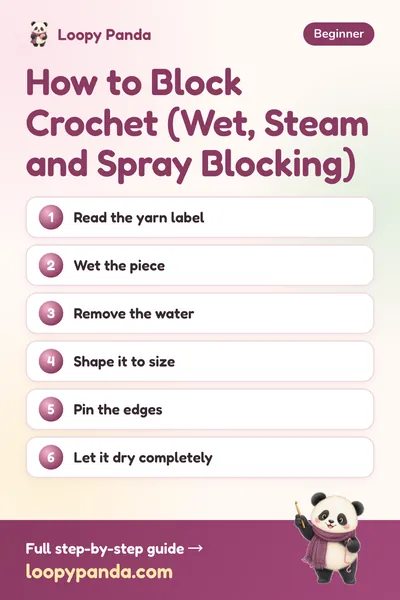
- Read the yarn labelThe care label decides what your piece can take: machine or hand wash, water temperature, and whether it may be ironed. If the label says do not iron, do not steam block.
- Wet the pieceWash or soak it as the label allows. For wool, use lukewarm water and do not rub or wring: The Woolmark Company says heat, moisture and agitation together make wool felt, and felting cannot be undone.
- Remove the waterLay the piece on a towel, roll the towel up and press to squeeze the water out. Repeat with a dry towel until the piece is damp, not dripping. Do not twist it.
- Shape it to sizeLay it flat on the mat or towel and gently pull it to the measurements in your pattern. For granny squares, pin all squares to the same size so they join evenly.
- Pin the edgesPin corners first, then the middle of each side, then fill in so the edges are straight. For lace, pin each point or loop.
- Let it dry completelyLeave it until it is dry all the way through, then unpin. Acrylic absorbs less water than wool and can take longer to dry; in humid air, give it space and airflow so it does not get musty.
Which blocking method for which yarn
Your yarn label comes first. This table is the general guidance from yarn makers and The Woolmark Company.
| Fibre | Wet blocking | Spray blocking | Steam blocking |
|---|---|---|---|
| Acrylic | Yes. A good choice for acrylic; allow extra drying time | Yes | Lion Brand says acrylic should not be steam blocked, and the Craft Yarn Council says not to block acrylic with heat |
| Cotton | Yes. Wash as the label allows, then pin and air dry | Yes | Possible through a damp cloth, but some cotton labels say do not iron or press, so check first |
| Wool | Yes. Lukewarm water, no rubbing or wringing, dry flat | Yes | Yes, if the label allows ironing: the two-dot iron symbol is the wool setting (up to 150 °C) and steam is allowed |
| Blends | Yes | Yes | Follow the label; if any fibre is acrylic, treat it like acrylic |
Iron dots on a care label mean a maximum sole-plate temperature: one dot 110 °C (no steam), two dots 150 °C, three dots 200 °C, according to GINETEX, the international care-labelling association. They are meant for ironing, not a blocking recipe, but they tell you how much heat the yarn can take.
Spray blocking
- Lay the dry piece on the mat and pin it to size.
- Mist it evenly with room-temperature water until it is damp all over.
- Leave it pinned until it is completely dry.
- Spray blocking uses the least water and suits any fibre whose label allows it to get wet. It is a good choice for a quick tidy-up of granny squares before joining.
Steam blocking
- Only use steam if the yarn label allows ironing.
- Pin the piece to size, or lay it on a towel.
- Lay a cool, damp cloth over it and press the hot iron on the cloth for a few seconds to make steam, or hold a steam iron just above the work. The iron should never touch the stitches directly.
- Let the steam penetrate, pat the fabric into shape, and leave it to cool and dry before unpinning.
What “killing” acrylic means
If you heat acrylic too much it changes for good: the yarn maker Mary Maxim calls “killing” acrylic “a permanent blocking method that melts the fibers”. The fabric goes flat, loses texture and loses its stretch, and it becomes very drapey. Never do it to anything that needs to stretch, such as a hat or a sweater, and always test on a swatch first. If you just want acrylic to lie flat, wet or spray block it instead.
What to block and what to skip
- Block: granny squares before joining, lace and shawls, garments, and blankets whose edges wave or curl.
- Usually skip: amigurumi. Their shape comes from the stitches and the stuffing, so blocking does not help.
- What blocking cannot fix: a wrong stitch count, a missing corner or a very tight foundation chain. See granny square problems and why crochet curls.
Frequently asked questions
Do crochet blankets need to be blocked?
Not always. Block a blanket if its edges wave or curl, or block the squares before joining so they are all the same size. A blanket that already lies flat does not need it.
Should I block granny squares?
It helps. Blocking squares to the same size before joining makes the seams easier and the blanket flatter. Spray blocking is the quickest way.
Can you block acrylic yarn?
Yes, by wet or spray blocking. Most yarn makers advise against steam or any heat on acrylic, because too much heat permanently flattens it (“killing” it).
Can I block granny squares without water?
Steam is the only way to block without soaking, and only if the label allows heat. Pinning a dry square without water or steam usually does not hold the new shape.
Should I block amigurumi?
Usually not. Amigurumi get their shape from the stitches and the stuffing.
How long does blocking take to dry?
Until it is completely dry, which depends on the yarn, the thickness and the air. Acrylic can take longer than wool. Do not unpin it while it is still damp.
Save it for later
Pin this guide to your Pinterest board so it's there when you pick up your hook.
Save to Pinterest
Tell me when new free patterns are out
We'll send you a short email when a new free pattern or tutorial goes up. No spam.
Thank you! You're on the list. We'll email you when a new free pattern is out.
Please enter a valid email address.
Please tick the box to agree to receive our emails.
Too many tries. Please wait a few minutes and try again.
Something went wrong. Please try again later.
New short videos every week, too, on YouTube